Seeing as it is the last history class of the year, I figured it would be beneficial to reflect on what we've learned throughout the year. I wanted to try to determine the common threads between all revolutions, an eventually try to determine the answer to "What makes something a revolution?"
First of all, revolutions begin with a "spark" or idea, something that the people want to change. This is usually prompted by a core problem in the gorvernment. The people see the need for progress, and if they have enough conviction, they will stand up for their cause( freedom, liberty, equality, self-determination, democracy),even if it is a risk to their well being. Many revolutions occured due to conflicted opinions and beliefs within the country, usually and borrow previous ideas from previous revolutions; old ideas are recycled and are modernized to fit the time period.
For example, in the French Revolution, the revolutionaries saw the success of the American revolution, seeing how they were able to obtain autonomy from the oppressive british dictators. The ideals promoted in the French Revolution were still french, but were inspired by the american ambitions. Upon seeing the french revolt in 1848, europe was set ablaze with rebellion, sparking revolutions in Hungary, Romania, Poland and many others.
In more modern times with the onset of technology, ideas spread faster, adding fire to fuel a revolution. This is seen with the recent Tunisian Revolutions, which is said to have inspired the Egyptian Revolution that successfully toppled the government of Egypt. This can be considered a "revolutionary wave" effect.
Friday, June 3, 2011

Tuesday, May 10, 2011
All of us are now aware of the death of Osama Bin Laden, knowing what an important time it is in United States history that is sure to in our children's textbooks.The murder of Osama Bin Laden has been considered one of the defining moments in President Obama's term as president of our country, but is this really the case? Will the demise of this one despicable individual really have a pronounced effect on the future and safety of this country, or is really more a symbolic victory? Will it cause negative repercussions? We all have our opinions, but when I heard about the death of Bin Laden, I was a bit shocked at first, but then it dawned on me "Does the killing of one person really make our country great?" Now, don't get me wrong, I realize that Bin Laden was an awful human who killed thousands of innocent people, but it was slightly unsettling to see so many people celebrating the death of this man. Plus, the Us has spent countless time and energy on the murder of this man; we are still trillions of dollars in debt, and cannot even provide decent healthcare or education to our citizens. Was it really worth it to kill Osama? I think not. Though the leader of Al Quaida may be gone, his ideas still live on in his follower. His death may prompt many negative repercussions, compromising the safety of out country.
Honestly, I do not feel pride after the death of Osama Bin Laden. Instead, I feel apprehension for the future.
Honestly, I do not feel pride after the death of Osama Bin Laden. Instead, I feel apprehension for the future.
Friday, April 22, 2011

The 1960s were a momentous decade with rebellions occuring all over the world, each one trying to change their country, discarding the old, bringing in the new. Two large events occuring during that era were the Cultural Revolution in China and the Counter Culture revolution in America. I thought I would explore what these two crucial movments had in common, and how they differed.
The chinese and americans both wanted to get rid of the old traditions, and bring in a new era. In 1966, Chinese universities were closed and students were rallied to destroy the old habits, customs, culture and thinking- or the " Four Olds". In the process of doing this, man of China's buildings, works or art, and other cultural icons were damaged. Violence also broke out, with people attacking figures of authority such as teachers and communist party members. In a way the student protests of the 1960s were similar. The majority of students who protested were speaking out against the vietnam war and the more conservative society of the 1950s. Like the chinese cultural movement, violence did ironically also break out during these anti- war demonstrations.
 On May 4th, 1970, the National Guard began shooting at student protesters at Kent State University, killing 4. This understandably riled up the protesters even more, prompting them to boycott classes and set off a smoke bomb in the Old Capitol.
The Tiananmen Square Protests in China, although they did not occur in the 60s, had many similar aspects to the Ken State Protests. Tiananmen Square took place in 1989, when more than a million people, many of which were students, gathered into Beijing's Tiananmen Square to protest the increasingly corrupt Chinese Government. The military intervened, and tanks entered the square. After the wave of violence and executions subsided, over 700 people were killed. The destruction of the Tianamen Square protests were much more so than the Kent State University killings, but both are eerily similar.
As we can see, the 60s ushered in a time of revolution, a time when people began to question old traditions and corruptions. They were willing to risk anything, even their lives, to usher in new eras.
Thursday, April 7, 2011
Satyagraha

Throughout this entire unit on India the same question continued to run through my mind “ Would Gandhi’s method of satyagraha (peaceful protest) actually work?” In my heart, I really wanted to believe it would, but then I doubted whether it was too idealistic. Do humans inherently become violent over disputes?This question is close to my heart, as I am researching the peaceful people power revolution for my spring paper. So I know it is possible to make an immense impact on society without violence…but not many revolutions occur this way. Does humanity naturally incline towards brutality? I thought I’d explore these questions.
First of all, what is satyagraha? It translates directly to “soul truth” and was Gandhi’s philosophy of non violent resistance that he attempted to teach the people of India. We know that in the end, Gandhi’s satyagraha campaign was not successful, juding on the fact that The Partitioning of India caused huge strife between the Muslims and Indians, resulting in the deaths of hundreds of thousands of people. Even Gandhi himself thought he was a failure.
I belive that Satyagraha does have the possibility to be successful, however, a country has to be in a certain amount of political and social stability. If a nation is in a state of chaos, the people are already aggravated and violence will breakout. I believe it is a part of human nature. We are not pacifists at heart, yet some of us choose to be.
Thursday, February 10, 2011
Egyptian Revolution and the Internet

The Egyptian Revolution seems to be ubiquitous in the world today; every instance you open a newspaper or turn on a TV it's right there in front of you. And rightfully so! This is one of the largest political revolutions to occur in long time, and it's outcome could have the potential to affect the whole world. The internet block Egypt enacted upon it's people has also been heavily publicized; I thought I might offer a bit of my insight into the role of internet in this revolution.
Before I go further into this idea, it's important to first understand some background information about this movement . On January 25th, people began to protest in the streets of Cairo, perhaps inspired by the recent successful revolution in Tunisia. The protesters were expressing dissent about many aspects of Egypt, such as widespread unemployment and poverty. Yet the foremost of their remonstrations was with the corrupt government of Hosni Mubarak, who had controlled the country for 30 years. In response to these early protests, Egypt blocked Twitter and finally the whole internet, a huge source of incoming and outgoing news for the Egyptians. The government was cutting an important lifeline away from the people, hoping it would conceal the revolution from the rest of the world. Ironically, the internet block actually brought more attention to the revolution, as many people realized what an extreme event was happening before their eyes. The government perhaps hoped that, without internet, the egyptian people would not be as able to efficiently communicate, and thus the protests would die down. Just look at the recent Tunisian Revolution, the main mode of communication there was by use of the internet and social networking sites such as facebook. After all, the internet is one of the main method of communication between people, with it gone would the protests continue? The answer is yes, for the most obvious reason: people were able to get around the internet block and still band together to protest. Do you think blocking the internet could ever totally halt a revolution? Personally, I think not in the modern day and age, as there are always methods to finding ones way around a block and also there are other modes of communication such as TV, newspaper, telephone and radio. While they may seem less efficient as the speedy internet, they are still quite effective, but mind you, much slower. In a way MKA is a micro society that backs up my opinion. The students as a whole rely on their computers to communicate, yet when it's necessary we get together in assemblies to spread information. Don't get me wrong, If the computers were cut out from our system it would be much harder for things to get done, but they would still happen, so long as we had motivation to do so. I do think that in the future, when society becomes more dependent on the internet for information ( and we are going in that direction) that it will be increasingly difficult to have a large scale uprising. People are already so glued to their computer screens, I can't imagine what it will be like in a few decades.
Monday, January 10, 2011
Woman of the Industrial Revolution


Last class, we were discussing the gender roles during the industrial revolution, and we began to read and discuss "Woman in Her Social and Domestic Character", a handbook of sorts instructing women of the time how to behave. It promoted a subservient lifestyle, one where women were dependent on their husbands and were strongly advised to act femininely. In the discussion, I remember a comment came up somewhere along the lines of " So did the industrial revolutions in a sense cause the '50s' image of woman?" In terms of a 50s woman, most of us imagine a housewife, pressured to be feminine and constantly take care of her family. She is repressed and her contributions to society are often ignored. This question got me thinking, and I think yes, in a sense it is true. Some may argue that prejudice towards woman had already existed for hundreds of years, but one could also say that the industrial revolution caused the major rifts in the gender roles of woman and men.
In a way, the industrial revolution (in its early stage) broadened opportunities for woman, bringing them out of the house and into the factories. Despite this, there was still gender separation in the workplace, with women and men doing different jobs. For example, women would do the spinning while men would do the weaving. As time progressed however, women and children began to stay at home leaving only the men to go to work. After reading the "Woman in Her Social and Domestic Character" I was even further convinced that the industrial revolution set the trajectory for the oppression of women. What do you think?
Thursday, December 9, 2010
Haitian Revolution
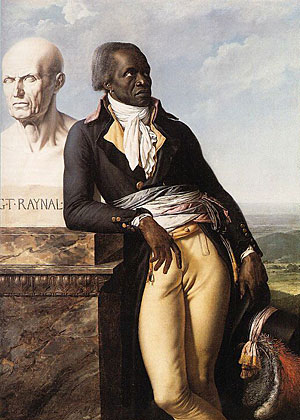
Toussaint L'Ouverture

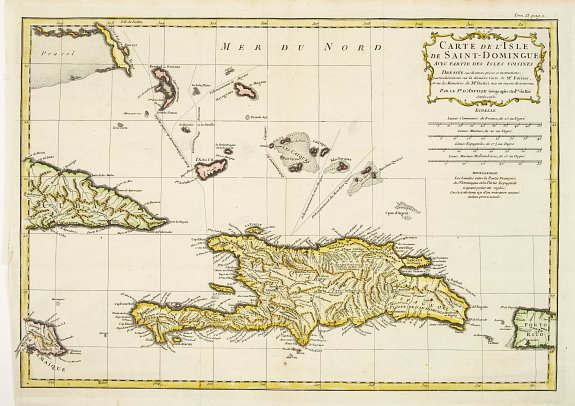
The Haitian revolution, while a violent revolt against oppression, was largely different from the American revolution. While the American colonists were rebelling against the new controlling government of Britain, many of the Haitian slaves who revolted had been enslaved for nearly their entire life, and wanted payback. What is interesting is that slavery was abolished in Saint Dominigue in 1804, while the Emancipation Proclamation was not passed until 1863. Slavery in Haiti was eradicated much earlier, suggesting that the revolt tactics used were more successful.
Toussaint L'Ouverture is often described as the George Washington of the Haitian Revolution. Though some might consider him a virtuous leader who caused the abolishment of slavery in Haiti, he was a petty and stubborn individual who put his interests above the well being of his people. Toussaint was known to deport or kill anyone who even seemed like a threat to him; an example of this is his deportation of Sonthanax, a French commissioner who essentially had the same goal for Haiti- the abolishment of slavery. Toussaint felt threatened by Sonthanax's growing popularity and forced him out of the country. Despite their common cause, Toussant cared more about his own glory than the interests of his people; this demonstrated his petty flaws.
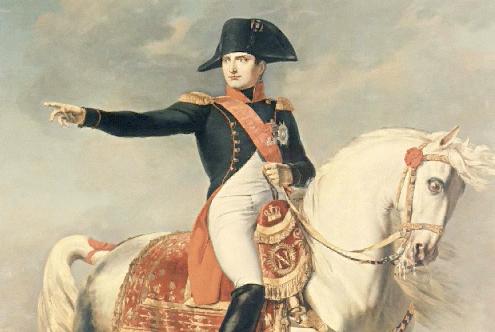
In addition, Toussaint pushed too hard for complete independence from France. In writing the new constitution, Toussaint declared himself the governor for life, or essentially a military dictator. Napoleon was not prepared to accept that, as he wanted the revenue Haiti would make. Toussaint's desire to control Haiti was the eventual cause of his downfall; Leclerc, a general of Napoleon, sent troops to the island and seized Toussaint and his family. He spent the rest of his life in prison, and soon died of pneumonia. So what do you believe? Was Toussaint L'Ouverture a virtuous leader, or a stubborn and petty one?
Wednesday, October 20, 2010
Alexander Hamilton
When looking over the reading, I was struck by Alexander Hamilton's plan for the government of America. Hamilton believed that one of the keys to a beneficial and stable government was a wealthy ruling class. He thought that to be effective, government needed the help of the elite, and thus imposed his "Funded Debt proposal". This proposal stated that the certificates of indebtedness that had been issued to wealthy speculators would be called back and replaced with interest- bearing bonds. This gave the elite bond owners a reason to want the government to prosper. After reading the passage, a few aspects of it stood out to me. I found it fascinating how much Hamilton believed that an elite class was so imperative to a strong government. In fact, I remember discussing a topic similar to this a few classes ago, debating whether a society could be based on economic equality or whether there needed to be a separation of classes, for example, wealthy and poor. Personally I believe that, although it would be ideal to have a government based on equality, it seems nearly impossible and somewhat impractical. As long as money exists, there is never going to be complete economic equality. Economic equality could be compared to communism, and as we know, communism failed. But what do you guys think? Can a government be founded on equality, or do you agree with Hamilton, in that there must be a separation of classes for government to be effective? Lastly ,I feel Hamilton's ideas were similar to the early forms of capitalism and "trickle down" economics. Hamilton concluded that one of the most crucial aspects of a successful government was the involvement of the elite class. This is related to capitalists, who believe that if you invest in the upper class, it will trickle down and benefit the society as a whole. Socialists, however, believe that society benefits when everyone, regardless of status, receives equal opportunity. Do you agree that Hamilton's ideas could be compared to capitalism? Share your thoughts :)

Tuesday, October 5, 2010
Violence and its role in Revolution
After listening the discussion we had last class and reading tonight's homework, the idea of violence and it's role in revolution came to mind . Last class we were responding to Tola's blog which discussed whether Americans were truly virtuous or simply whiny. We talked about the Son's of Liberty's methods of expressing their message of freedom, and came to the conclusion that they could essentially be considered terrorists. The sons used violence and scare tactics to cause a scene, such as the Boston Tea Party. Other destructive acts started by the colonists were the burning of the Gaspee and the Boston Massacre. For the most part, these events did not cause any improvement in the lives of the colonists, but rather prompted Britain to further impede upon their rights. For example, the Tea party triggered Britain to impose the Intolerable Acts which lessened the power of self- government in Massachusetts. Despite the downsides to these violent acts, they did draw attention, thus causing more people to support and join their cause. Overall, one may think that these destructive methods of gaining attention are inferior to more civil methods and are not necessary in revolution. However, I remember on Monday that our class came to the general consensus that some type of violent revolt is needed to spur a change. Patrick Henry agreed. In the passage we read for our read- aloud, Henry states "We must fight! I repeat sir, we must fight!" Patrick Henry realizes that to really gain the respect of England and achieve the liberties that they feel they deserve, they must start a violent conflict. They must be willing to risk death for what they believe in.
I believe that violent rebellion was needed to prompt a revolution during the 18th century and earlier, but not necessarily now. Humanity ( at least in America) has developed a much higher moral code and thus would be able to spur change without resorting to violence. With the technology society has nowadays, we have methods of spreading ideas that are much more widespread, civil, and easy. We have the ability to get a message across without violent means. In the 1700s, they could only hold protests and meetings, and spread pamphlets/propaganda. Violence was needed to start the revolution as America needed to assert the fact to Britain that they were a real threat. What do you guys think, how does violence play a role in revolution and is it necessary to trigger evolution of society?
I believe that violent rebellion was needed to prompt a revolution during the 18th century and earlier, but not necessarily now. Humanity ( at least in America) has developed a much higher moral code and thus would be able to spur change without resorting to violence. With the technology society has nowadays, we have methods of spreading ideas that are much more widespread, civil, and easy. We have the ability to get a message across without violent means. In the 1700s, they could only hold protests and meetings, and spread pamphlets/propaganda. Violence was needed to start the revolution as America needed to assert the fact to Britain that they were a real threat. What do you guys think, how does violence play a role in revolution and is it necessary to trigger evolution of society?

Wednesday, September 22, 2010
As I was reading over our most recent home work in the text book, a few ideas came to me, and I figured I would share them here. While reading about Salons I was thinking about the various ways information is shared and how it differs now and during the Enlightenment. During the 17th and 18th centuries, knowledge was spread through published (and smuggled) literature, or via salons. In modern times, however, we have a crucial tool for sharing information that was non-existent during the enlightenment: Internet. But which time period was/is better for promoting progress through the sharing of thoughts? Both have their benefits and downsides. For example, During the enlightenment, many works thought to be heretic or contradictory towards common beliefs were not allowed to be published- many publications were watered down ( like the Encyclopedia) or banned all together. This constant monitoring of content discouraged progress. In our modern times very few things are censored on the internet- at least in our country- allowing for the introduction of new ideas. Unfortunately, the internet brings many negatives into the picture; the anonymity that the internet provides can encourage people to introduce false information. Anyone can post anything online...an example of this is the website wikipedia. We are all told not to use wikipedia as anyone can post false information. Essentially, 17/18th century Europe had the opposite problem that we do now : over censoring vs. inadequate monitoring of what is posted online. Don't get me wrong, I do not believe that people's thoughts should be censored on the internet, but I do know that society as a whole needs to be a scrutinizing about what information they choose to accept as true.
A positive aspect of Salons during the enlightenment was simply that they brought people together ( although usually only the upper class citizens) to share ideas. In the age of the internet, despite social networking sites, people are actually more isolated from each other. Most people communicate through internet or text messaging... It may seem old fashioned, but I think having a group of people get together(like we are doing in class)to share thoughts is one of the best ways to come up with new ideas and innovations.
So what do you guys think, how was information sharing different that how it is now, which type do you think is more conducive to progress? Thanks for your thoughts!
A positive aspect of Salons during the enlightenment was simply that they brought people together ( although usually only the upper class citizens) to share ideas. In the age of the internet, despite social networking sites, people are actually more isolated from each other. Most people communicate through internet or text messaging... It may seem old fashioned, but I think having a group of people get together(like we are doing in class)to share thoughts is one of the best ways to come up with new ideas and innovations.
So what do you guys think, how was information sharing different that how it is now, which type do you think is more conducive to progress? Thanks for your thoughts!
Subscribe to:
Posts (Atom)